Skip to content
rebyte.ai

Hire a team of digital employees.

Equip each one like a real hire — an identity, its own computer, tools like Claude Code, and the instructions that make it yours. Then put your team to work.

01

Equip them like you'd equip a hire

A digital employee isn't a chatbot or an API call. You set one up the way you'd onboard a person — the same things any new hire gets:

  • An identity. A real account in your org — its own username and password, or a private key. A security principal you can authenticate, audit, and revoke, exactly like a person.
  • A persona. What the employee is for: its role, what it owns, how it works — the system prompt, in plain language. This is what makes one employee a research analyst and another an SRE.
  • A computer. Its own cloud machine — file system, shell, browser, network. Persistent, so it picks up right where it left off.
  • Tools. Coding agents like Claude Code and Codex, web search, and connectors — the same kit you'd hand a real hire.
  • Access control. Permissions granted exactly the way a human's are. Whatever a teammate could be given — repo write, a Slack channel, read-only on a database — you grant the employee, and nothing more.

Set those, and the worker is yours — a named, scoped, accountable member of the team, ready in every conversation.

02

A team, not a bot

You don't hire one do-everything bot. You hire the team the work needs — a researcher, an engineer, an analyst, an on-call for ops — and each one is its own employee, with its own computer and its own persona.

They run independently and in parallel. One drafts a research brief while another ships a pull request and a third watches your logs. You coordinate them the way a manager coordinates people: by talking to each.

Add a hire when the work grows; retire one when it doesn't. The team is yours to shape.

You don't prompt a model. You run a team.
— what Rebyte actually is
03

What they do for you

Not chat, not autocomplete — the kind of work you'd hand a coworker, across the whole org. A sampler:

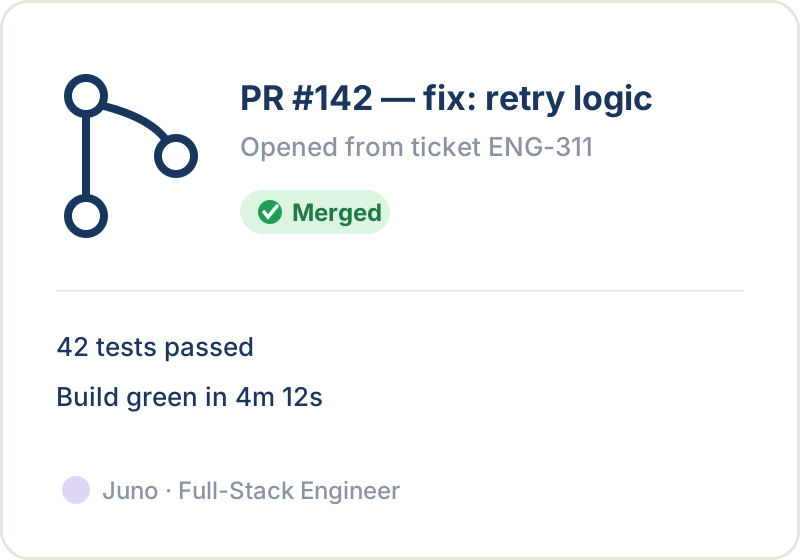
  • Closing tickets. Pick up a Linear or Jira ticket, write the fix, open the PR, get it green.
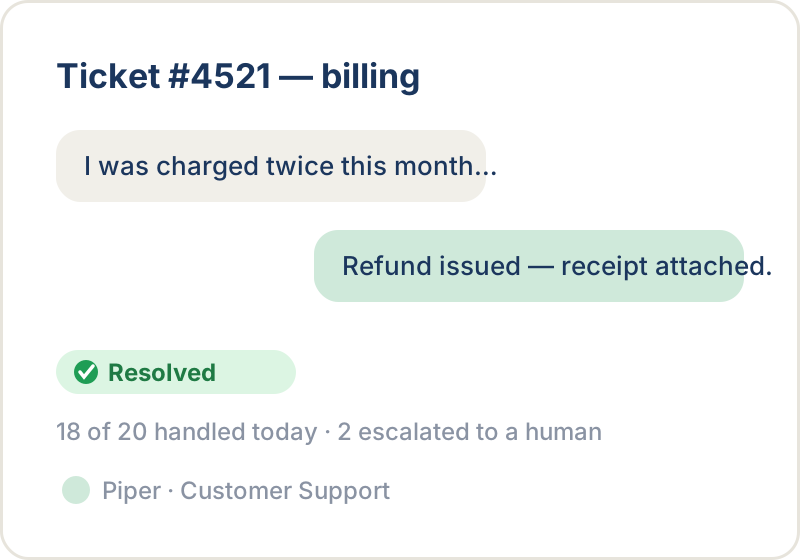
  • Customer support. Work the support inbox — answer, troubleshoot, refund, escalate the ones that need a human.
  • On-call & SRE. Watch the logs, triage the alert, open the incident, page a person when it actually matters.
  • Competitive research. Track competitors and turn findings into a sourced brief — citations, not guesses.
  • Sales development. Enrich inbound leads, draft the outbound, prep the rep before every call.
  • Finance & bookkeeping. Reconcile transactions, chase overdue invoices, flag the anomalies before close.
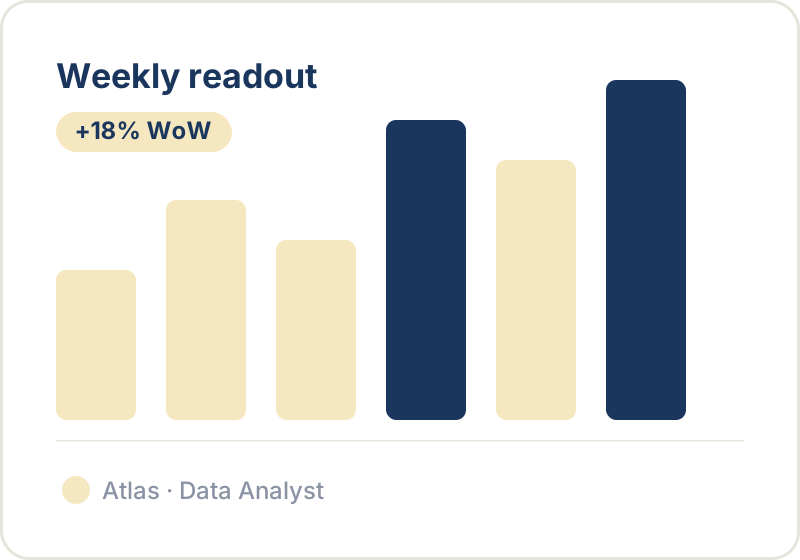
  • Reporting & analytics. Pull the numbers, build the dashboard, write the weekly readout — data inspected, not hallucinated.
  • Recruiting ops. Screen inbound applicants, schedule interviews, draft the follow-ups.
  • Content & marketing. Draft posts, SEO pages, decks, and the newsletter — on brand, as real files.
04

Pricing

A digital employee on every plan. Paid plans add team controls, storage, and the Agent Context connectors.

Personal
Daily free usage · pay-as-you-go
$0
Pro
Bring your own key · private skills
$20/mo
Team
Governance · shared workspaces · team collaboration
$20/seat/mo
Enterprise
SSO, SCIM, dedicated VPC, on-prem models, custom SLAs

See full pricing →

05

Start here

The smallest way to begin: hire one employee, give it a task, watch it work. No install. No setup. If you prefer the API, three lines of curl will spin one up.

app.rebyte.ai · documentation · hello@rebyte.ai

rebyte.ai · san francisco · 2026
Sign Up →